


Location App-Phone Tracker
3.62.00 Reviews
App Specs
- Version
- 1.1.1
- Updated On
- License
- Free
- Downloads
- 100,000+
- Developer
- GUANGSHENG LLC
- Categories
- Maps & Navigation
- Platform
- Android
Screenshots
 Analysis by AppCompare
I judge a location-sharing app less by how impressive its map looks and more by whether everyone involved understands when their location is visible and what the app is meant to help with. A phone finder, a family check-in tool, and turn-by-turn navigation solve different problems, even if they all involve a map. Location App-Phone Tracker is aimed at sharing location between people or devices, so I would approach it as a coordination tool rather than a replacement for a full navigation app.
What the free price does—and does not—tell you
The app is free to download, which makes it easy to consider for occasional location sharing without first paying for a subscription. That is a practical advantage if you only need a simple way to coordinate with people close to you. Free access alone, though, does not tell me whether every feature is available without conditions, so I would check the current in-app screens before relying on a particular tool for an important routine.
It is made by GUANGSHENG LLC and is listed for a general audience. Its current release is version 1.1.1, and it has reached over 100,000 installs. Those details help place it as an actively used phone-location app, but they do not guarantee that it will suit every family or work across every combination of devices. I would test the setup with the people who will actually use it before making it part of a safety plan.
Getting Started with the Tracker
First things first, let’s talk about the setup. The app is available for both Android and iOS, which is pretty convenient no matter what side of the smartphone fence you’re on. Downloading and installing the Location App-Phone Tracker was a breeze. Just head over to your respective app store, and you’ll have it up and running in no time.
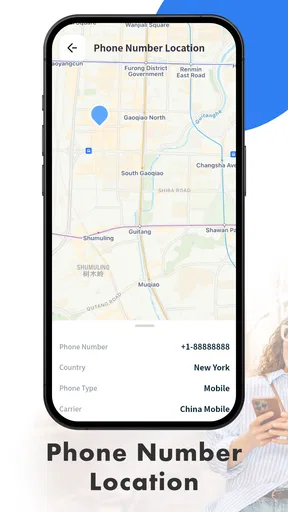
Once installed, the app asks for some basic permissions, like access to your location and contacts. It might sound a bit intrusive at first, but trust me, it’s all part of the magic. The app needs to know your location to track your device, and access to contacts is necessary if you want to track other phones in your network. All in all, it’s pretty standard for apps like this.
Core Features That Stand Out
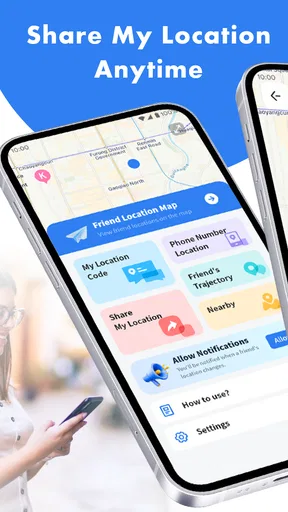
Now, let’s dive into the juicy parts—the features. This app comes packed with several useful tools that make it worth checking out. Here's a breakdown of what I found most impressive:
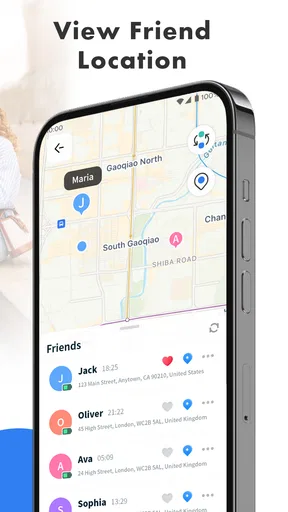
- Real-time Tracking: The app offers real-time tracking, which is perfect if you’re trying to locate your phone in the moment or keep an eye on where your kids are. The accuracy is surprisingly good, and I found the refresh rate quick enough to be reliable.
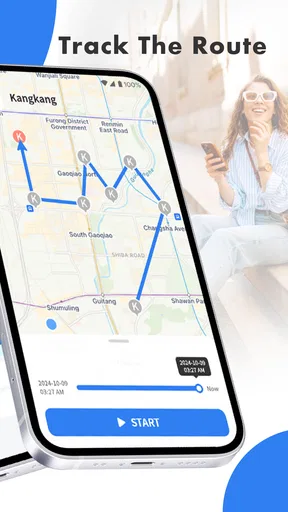
- Location History: Want to know where you’ve been over the past week? The app keeps a record of your location history, which can be super handy if you need to retrace your steps.
- Geo-fencing: This feature allows you to set up virtual boundaries. If your device or the person you’re tracking crosses these boundaries, you get an instant alert. It’s perfect for keeping track of kids or even for personal safety.
- Battery Status: One neat little feature is the ability to check the battery status of the device you’re tracking. It’s a great way to know if your phone is about to die on you.
Making the information useful in daily life
The real value of live location is often reducing unnecessary calls, not watching a moving dot all day. For example, if a family member is travelling home and the arrival time is uncertain, a shared view can help others decide when to start dinner or whether to wait before heading out. I would agree on a specific reason and a time window for sharing first; that keeps a helpful check-in from turning into constant monitoring.
Worth Reading Before You Choose

EA SPORTS FC Mobile 26 Is a Bigger Football Game, but It Takes Time

Flipboard Shows What News Apps Must Do Beyond the Feed

Switching to Android Auto Means Rethinking Your Driving Routine

Google Calendar Makes a Crowded Week Easier to Manage

Ludo King Makes the Most of the Minutes Between Plans

Baby Panda World Brings Quick Play to Modern Phones, but Its Game Library Feels Busy
Location history has a different use from live tracking. If I am trying to remember whether I stopped at a shop on the way home, a record can help me retrace a routine. But a history is not the same as proof of someone’s intentions or a guarantee that every point is exact. I would treat it as a practical memory aid, especially when a phone may have been indoors, in a vehicle, or temporarily unable to report a fresh position.
Geofencing is most useful when the boundary represents a clear event: arriving at a familiar place, for instance, rather than crossing an arbitrary line on a map. Before relying on an alert, I would set the boundary with the other person and test what notification each of you receives. A boundary that is too tight can create noise; one that is too broad may not answer the question you actually have. The goal is a useful prompt, not a substitute for a conversation.
User Interface and Experience
The design of the Location App-Phone Tracker is clean and user-friendly. Navigating through the app is intuitive, with all the main features easily accessible from the home screen. Even if you’re not the most tech-savvy person, you’ll find it pretty straightforward to use.
One thing I appreciated was the simplicity of the alerts and notifications. They’re not overwhelming, and you can customize them to suit your needs. Whether you want to be notified immediately about a location breach or prefer a daily summary, the choice is yours.
Choosing between a tracker, a map, and a built-in phone finder
This app belongs in the location-sharing corner of maps and navigation, but it is not the same kind of tool as a route planner. If I need directions, traffic context, or help choosing a route, I would reach for a dedicated navigation app. If the question is simply “Where is the person or phone we agreed to share?”, a tracker is a more direct fit.
There is also a useful distinction between sharing a person’s location and finding a misplaced device. A phone’s built-in locating service may be the better first choice when the device belongs to me and I need the operating system’s recovery options. A mutual location app makes more sense when several people have agreed to share their whereabouts. I would not install this as the sole safeguard for a lost phone without checking that its account and device setup support the recovery situation I have in mind.
For a mixed-device household, cross-platform availability can make coordination easier than relying on features that work best within one phone ecosystem. Still, everyone has to install and configure the same arrangement, and comfort with sharing matters more than platform convenience. I would ask each participant to open the app themselves, review the permissions, and confirm what they are sharing rather than setting it up on someone else’s behalf.
Privacy, consent, and sensible boundaries
Location information is unusually personal because it can reveal routines as well as a current position. Even when the intention is ordinary family coordination, I would explain who can see the location, when sharing is expected, and how to stop it if circumstances change. That conversation is part of a responsible setup, not an optional extra.
The app’s age rating is Everyone, but that does not make every use appropriate for every age or situation. For a child, I would frame location sharing as a safety arrangement and make sure they understand it. For adults, mutual agreement should be explicit and ongoing. A tracker should not be used to monitor a partner, employee, friend, or anyone else without their knowledge and permission.
Before turning on location access, I would also review the permission choices shown by the phone and decide whether the app needs access only while in use or in the background for the intended task. A setting that limits background access may affect the usefulness of continuous updates, while broader access has a privacy cost. I would choose deliberately, then test the actual behavior rather than assume that the most permissive setting is automatically best.
When sharing can disappoint
A location marker depends on the phone being able to report its position. A low battery, weak connection, indoor setting, or a device left behind can make a displayed location stale or misleading. The battery-status tool may help someone notice that a phone is running low, but it does not remove the need for a backup plan. If timing matters, I would agree on a text or call as well.
Notifications also need a little practical tuning. A stream of alerts can become background noise, while too few can make a boundary feature less useful. I would start with only the alerts tied to a real decision, then adjust after a few ordinary days. That small trial helps reveal whether the app is supporting the household’s routine or simply adding more phone interruptions.
There is a learning curve beyond tapping around the interface: everyone needs to know whose device is being viewed and what a location update means. If one person expects a tracker to provide emergency response, guaranteed delivery, or precise directions, expectations are mismatched. I see it as a convenience for agreed check-ins, not a replacement for emergency services, direct contact, or a reliable route guide.
Privacy and Security
In today’s world, privacy is a big deal. The developers of the app seem to have taken this seriously. They’ve implemented encryption for all data transmissions, meaning your location data remains private and secure. Additionally, the app does not share your data with third parties, which is always a relief.
Of course, it’s important to remember that you should use this app responsibly. It’s designed to help you keep track of your own devices or those within your family with consent. Using it otherwise could lead to privacy violations.
Who is likely to get the most from it?
I can see this being useful for people who already have a clear, limited reason to share location: relatives coordinating pickups, a household checking whether someone has arrived, or someone who wants an agreed way to retrace their own movements. The combination of current location, history, geofencing, and battery information can cover several everyday questions without turning the app into a full navigation suite.
It is less suitable for someone who wants only turn-by-turn directions, a professional fleet-management system, or a tool that guarantees a person is safe. It is also a poor fit if a member of the group does not want location sharing or if nobody is willing to maintain the setup. In those cases, a direct call, a one-time location share, or a built-in phone finder may be simpler and less intrusive.
One practical approach is to begin with a single, low-stakes use case—such as coordinating a pickup—rather than enabling every available option at once. Check that the right person appears, that updates make sense, and that alerts arrive as expected. If the arrangement feels useful and comfortable to everyone, you can decide whether history or boundaries add real value. If it feels like surveillance or creates confusion, stop and choose a less persistent way to check in.
Final Thoughts
So, what’s the verdict? Location App-Phone Tracker is a solid choice if you’re in the market for a reliable tracking app. It’s packed with useful features, easy to use, and doesn’t compromise on privacy. While it may not have the flashiest interface, it gets the job done efficiently.
Whether you’re prone to losing your phone or just want to ensure your family’s safety, this app is worth a download. Head over to your app store, give it a try, and see how it fits into your daily routine. Who knows, it might just become your new best friend!
My buy-or-skip call
With a 3.6 average from nearly 500 ratings, the public response looks mixed rather than universally enthusiastic, so I would treat a personal trial as more useful than assuming it will suit everyone. There is one written review, which is a small amount of commentary to compare against your own experience. The app is free, so trying it does not require a purchase; I would still consider the time spent setting up sharing and the privacy involved as part of the cost.
My recommendation is to try it if you want an uncomplicated, consent-based way for a small group to coordinate locations and you are willing to test how it behaves on your phones. Skip it if your main need is navigation, device recovery with platform-specific controls, or a guaranteed safety service. For me, the deciding question is simple: will a shared location answer a recurring everyday question without making anyone feel watched? If yes, this app may earn a place in your routine; if not, a less persistent check-in is the better choice.
Pros
- Accurate real-time location tracking.
- User-friendly interface for easy navigation.
- Low battery consumption while running.
- Customizable alerts for specific locations.
- Cross-platform compatibility for Android and iOS.
Cons
- Requires internet connection for updates.
- Frequent ads can be distracting.
- Limited features in free version.
- Privacy concerns with location data.
- Registration process is lengthy.
FAQs for Location App-Phone Tracker
How accurate is the location tracking feature in the Location App-Phone Tracker?
The Location App-Phone Tracker provides real-time tracking with high accuracy, typically within a few meters. It uses GPS, Wi-Fi, and cellular networks to ensure precise location data. However, accuracy may vary in areas with poor signal reception or dense urban environments, where GPS signals might be obstructed.
Is the Location App-Phone Tracker compatible with both Android and iOS devices?
Yes, the Location App-Phone Tracker is designed to work seamlessly on both Android and iOS platforms. Make sure your device's operating system is up-to-date to ensure full compatibility. Additionally, certain features may require specific hardware capabilities, so check the app’s requirements in the app store.
Does the Location App-Phone Tracker drain the phone’s battery quickly?
Location tracking apps can consume more battery than usual due to constant GPS usage. However, the Location App-Phone Tracker is optimized to minimize battery drain. Users can adjust the app’s settings, such as updating location less frequently, to conserve battery life. It's advisable to monitor your usage to ensure optimal performance.
Is my personal data safe with the Location App-Phone Tracker?
The app prioritizes user privacy and employs strong encryption methods to protect your data. It does not share your location data with third parties without consent. Always review the app’s privacy policy to understand how your information is used and ensure you’re comfortable with their practices before downloading.
Can I track multiple devices with the Location App-Phone Tracker?
Yes, the app allows you to track multiple devices, which is ideal for families or teams. You’ll need to have permission from the device owners to track them. Simply add the devices within the app, and you can monitor their locations in real-time. Be sure to comply with local privacy laws when tracking others.


